Reviews forBad Day at Black Rock
Bad Day at Black Rock

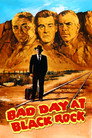
Bad Day at Black Rock marks two firsts for me—Spencer Tracy and, more significantly, John Sturges (shocking, I know). Set against the backdrop of a wounded postwar America, the film is steeped in McCarthy-era anxiety about silence, intimidation, complicity, and the deep moral cost of looking away—unmistakably shaped by the 1950s, even as its story takes place a decade earlier. Widely recognized as one of the earliest major American films to directly confront anti-Japanese racism in the wake of World War II, Bad Day at Black Rock is a morally corrosive western noir boasting considerable talent both in front of and behind the camera. Spencer Tracy won Best Actor at Cannes for his role as John J. Macreedy—the film’s moral center, and an interesting one at that. He’s not a detective, not a sheriff riding into town, not even blood-related to anyone there—he’s simply a man who refuses to be bullied into blindness in his quest to find out what happened to Komoko, a Japanese resident of the town. The supporting cast is equally strong—from Robert Ryan’s menacing Reno Smith to Ernest Borgnine’s brash, bull-headed Coley Trimble. Funnily enough, Lee Marvin turns up in a small role as Hector David, the silent, menacing figure who sizes up Macreedy throughout the film—a nice surprise after having just watched Point Blank for the first time recently. Alongside Sturges’s wonderfully suspenseful direction, William C. Mellor’s CinemaScope work is integral to the film’s entire identity. Shot on location in Lone Pine, it calls to mind Budd Boetticher’s Comanche Station and how Charles Lawton Jr. utilized the barren, rocky terrain to underscore the loneliness of its protagonist. Mellor makes the town feel constricting and suffocating, its utter isolation pressing in from every angle. There’s nowhere for Macreedy to run, and the town becomes its own special kind of hell. Bad Day at Black Rock was a fantastic introduction to John Sturges, both as a director and as an artist. The film’s influence lingers through the sheer portability of its setup, but the deeper reason it feels so current is that it remains one of the cleanest American films ever made about communal cowardice.
