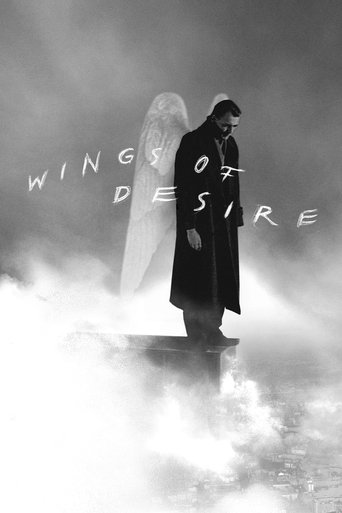
Diary Entry forWings of Desire

Cuando el niño era niño, no tenía opinión sobre nada, no tenía hábitos, no tenía costumbres; a menudo se sentaba con las piernas cruzadas, salía corriendo, tenía un remolino de pelo y no hacía muecas cuando lo fotografiaban. Spanish: Siempre he pensado que cuando nacemos, somos un lienzo en blanco que se dibuja y pinta a medida que nos exponemos al mundo exterior; mientras adaptamos influencias como tendencias propias de nuestra personalidad, como si fuéramos una masa maleable que apenas está en proceso de encontrar su forma permanente. Con cada experiencia vivida, esa masa se deforma, pero en su interior contiene una capa invisible de base: ese núcleo y corazón de toda humanidad, el espíritu, ese que define nuestra manera de mirar el mundo y se transforma con cada acción que dejamos en él. Cuando el niño era niño, era la época de estas preguntas: ¿Por qué soy yo y no tú? ¿Por qué estoy aquí y no allá? ¿Cuándo empezó el tiempo y dónde termina el espacio? ¿No es la vida bajo el sol solo un sueño? ¿No es lo que veo, oigo y huelo solo la apariencia de un mundo previo al mundo? ¿Existe realmente el mal en las personas, personas malas de verdad? ¿Cómo puede ser que yo, el que soy, antes de ser, no fuera, y que algún día yo, el que soy, ya no sea el que soy? Esas preguntas me parecen brillantes, porque expresan la inquietud más profunda de la identidad, ese tirar de hilo que nos obliga a preguntarnos no solo quién soy, sino cómo he llegado a serlo, y qué quedará de mí cuando ya no sea lo que soy. Son preguntas sobre la distinción entre el yo y el otro, entre lo que heredamos, lo que elegimos, lo que sentimos y lo que nos imponen. Somos seres dinámicos, moldeados por cada experiencia, cada relación y cada pensamiento, como una esponja que absorbe todo lo que la rodea: percepciones, emociones, memorias y ecos de personalidad de cada mundo que habita esta tierra. Cuando el niño era niño, despertó una vez en una cama extraña y ahora lo hace una y otra vez. Mucha gente le parecía hermosa entonces, y ahora solo unas pocas, por pura suerte. Se imaginaba claramente un paraíso y ahora, a lo mucho, lo intuye, no podía concebir la nada y hoy se estremece al pensarlo De niños, todo es nuevo y sorprendente, la curiosidad nos carcome con intensidad, pero al crecer, muchas veces la rutina, los prejuicios, las expectativas sociales y personales construyen muros, nos atan las manos con cadenas y nos encierran en jaulas: nos enseñan a callar, a no cuestionar, a no sentir miedo ante lo desconocido. Y entonces perdemos algo esencial: la imaginación que crea universos, que moldea el ingenio de las creaciones más grandes en la ingeniería, la imaginación que ve milagros en lo ordinario, la libertad que pregunta sin temor. ¿Por qué no ven todos, como los niños, las puertas, los portales y las aberturas que hay bajo la tierra y arriba, en el cielo? Si todo el mundo lo viera, habría una historia sin asesinatos y sin guerras. Cuando la cámara comenzó a flotar por las nubes, me recordó a Enter the Void (https://boxd.it/avOIpN): aquel filme que explora ese concepto del alma errante deambulando en una especie de purgatorio visualmente extravagante antes de volver a nacer. Si allá se lloraban colores, aquí se llora filosofía, realismo y pura genialidad; aquí se llora de excelencia y pureza con visuales que complementan la poesía argumental del ángel que simplemente observa, sugiere, pero no interviene; planteando la idea de que somos seres libres que ante sugestiones somos quiénes aceptamos o rechazamos en función de nuestras determinaciones. Los ángeles caminan invisibles entre los humanos, escuchan nuestros pensamientos y nos consuelan en silencio, pero incapaces de intervenir al 100%. Después de todo, si lo hicieran, nos arrebatarían la libertad que define nuestra esencia y el mérito de elegir el bien sobre cualquier tentación. Así el filme representa una existencia pura y sin dolor, pero vacía en sabor: ángeles que desean experimentar la bella experiencia de vivir en todo su esplendor, sin las fronteras que separan el plano espiritual del terrenal. Bajo este concepto, la cámara viaja entre lugares, momentos y pensamientos simultáneos, ilustrando cómo cada ser humano es un universo de ideas en flujo constante, donde cada persona va en su propio tren de pensamiento, transmitiendo mensajes o vibras que moldean la realidad. Cada una de esas situaciones me recordó a una de mis películas favoritas de vida: It’s a Wonderful Life (https://boxd.it/28xA), que nos enseña cómo la vida de un hombre puede impactar a tantas otras. Cómo algo que para mí puede parecer insignificante, para otro puede ser el acto determinante de su vida. Es increíble el impacto que tenemos en los demás y lo poco conscientes que somos del efecto en cadena que una pequeña acción puede provocar. La simple decisión de prender a todo volumen un equipo de sonido en plena calle, por ejemplo, puede afectar la calidad del sueño de muchas personas a tu alrededor, hacer que se levanten de mal humor, les vaya mal en el trabajo o incluso provocar una discusión familiar. Todo eso, a partir de un gesto impulsivo que, sin saberlo, se convierte en la chispa de algo mucho mayor. Claro, también depende de cómo percibimos el entorno. Para algunos puede no significar nada; para otros, puede ser abrumador. Entonces me parece súper interesante ese enfoque de la película: cómo la cámara nos lleva a lugares cotidianos para ser testigos de los pensamientos de cada persona, percibiendo, casi por intuición, cómo una acción influye en la otra y viceversa, todo conectado a través del pensamiento. Y eso, honestamente, me parece wow. ¿Cómo debería vivir? Quizá esa no sea la pregunta correcta, sino ¿cómo debo pensar? Agradezco infinitamente a @antxlr (https://boxd.it/atTJ7n) por su preciosa reseña y todas esas interpretaciones que logra sacar de las películas que ve, porque me dejan completamente en shock y me hacen replantearme múltiples cosas; aquí me hizo saltarme mi lista de pendientes para ver esta joya. Amé la manera en que retrata a los ángeles que nos guían y nos consuelan. Eso es hermoso. Aunque la perspectiva de la película difiere del espiritismo —donde los ángeles son espíritus elevados, en plenitud moral y espiritual—, hay un punto en común: el deseo de evolucionar. Aquí los ángeles anhelan dejar de flotar eternamente para vivir, lo que metafóricamente puede entenderse como el deseo del espíritu de reencarnar para seguir progresando, aun con el dolor que implica existir. Damiel no quiere tener alas; quiere vivir un instante humano, aunque venga con sufrimiento. Y eso es hermosísimo. Porque cuando el espíritu alcanza cierto grado de perfección, la reencarnación deja de ser necesaria, a menos que exista una razón mayor, un sacrificio por amor al prójimo. Y en ese sentido, el gesto de Damiel se siente casi como un acto de entrega, una forma de sacrificio divino que lo humaniza. Técnicamente, esta película tiene todos los elementos para ser perfecta. Algunas escenas me perdieron un poco y el final no me gustó mucho, pero su atmósfera, filosofía y fotografía la elevan. Objetivamente es de 5 estrellas, pero subjetivamente la siento entre 3.5 y 4. Aún así, la amé. Sobre todo cómo usan el blanco y negro, y el color para distinguir entre la perspectiva angelical de la terrenal. PD: (Si no lo siguen todavía, haganlo!!! Que escribe reseñas increibles) Aquí su cuenta: @antxlr (https://boxd.it/atTJ7n) --------------------------------------------------------------- When the child was a child, he didn’t know he was a child; everything had a soul, and every soul was one. When the child was a child, he had no opinions, no habits, no customs; he’d often sit cross-legged, run aimlessly, his hair a swirl of motion, and he never made faces when photographed. English: I’ve always believed that when we’re born, we’re blank canvases painted and reshaped by what the world pours onto us. We adapt, we imitate, we mold —like soft clay still trying to find its final form. Each experience leaves an imprint, a dent, but underneath it all, there’s a hidden core —that invisible base that holds our essence: the spirit. The one that shapes how we perceive the world, and evolves through every action we leave behind. When the child was a child, it was the time for these questions: Why am I me, and not you? Why am I here, and not there? When did time begin, and where does space end? Isn’t life under the sun just a dream? Isn’t what I see, hear, and smell just the appearance of a world before the world? Does evil truly exist? Are people really evil? How is it that I, the one I am, before I was, was not, and one day, I, the one I am, will no longer be the one I am? Those questions are brilliant, because they express the deepest curiosity of identity, that thread we can’t help but pull, the one that forces us to ask not just who am I, but how did I become this, and what remains once I’m gone. They draw the line between the self and the other, between what we inherit, what we choose, what we feel, and what we’re told to be. We are ever-changing beings, shaped by every experience, every relationship, every thought —like a sponge absorbing everything around it: perceptions, emotions, memories, echoes of every world that coexists on this Earth. When the child was young, he once woke up in a strange bed—and now, he does so again and again. Back then, he found everyone beautiful; now, only a few, by sheer luck. He used to imagine paradise vividly —now he barely senses it. He couldn’t conceive of nothingness, and now he trembles at the thought. As children, everything feels new and marvelous. Curiosity consumes us. But as we grow, routine, prejudice, and social expectations build walls—they chain our hands, silence our voices, and confine our spirits. We’re taught not to question, not to feel fear, not to wander too far. And in doing so, we lose something essential: the imagination that builds universes, that fuels human genius, that finds miracles in the ordinary or the freedom to ask without fear. Why don’t people see, like children do, the doors, the passageways, and openings beneath the earth and above the sky? If everyone could see them, there would be no more murders and no more wars. When the camera started floating through the clouds and sky, I instantly thought of Enter the Void (https://boxd.it/avOIpN) —that film about a wandering soul drifting through a visually extravagant purgatory before being reborn. But this… this felt a thousand times better. If that film cried colors, this one cries philosophy, realism, and pure genius. Here you cry excellence and purity with visuals that perfectly complement the poetic idea of an angel who only observes, who suggests but never intervenes, proposing that we are free beings, and it’s through our choices that we define ourselves. The angels walk invisibly among us, listening to our thoughts, silently comforting us, but unable to truly intervene. If they did, they’d strip us of the freedom that gives our existence meaning, the freedom to choose good over temptation. So, the film portrays a pure, painless existence —yet tasteless, hollow. Angels longing to live, to feel, to experience the beauty of existence without the boundary between the spiritual and the physical. From that idea, the camera drifts between places, moments, and simultaneous thoughts —illustrating how every human being is a universe of ideas in constant motion, each one with its own train of thought, sending vibrations that reshape reality. Each of these moments reminded me of one of my all-time favorite films: It’s a Wonderful Life —that beautiful reminder of how one life can impact so many others. How something that seems meaningless to me might be the turning point of someone else’s life. It’s incredible, the impact we have on others and how unaware we are of the chain reaction our smallest actions can cause. Like blasting your stereo late at night: it might ruin someone’s sleep, make them wake up in a bad mood, have a bad day at work, or even argue with a loved one. All from one impulsive act —the spark that ignites a storm we’ll never witness, but that began with us. Of course, it all depends on perception. For some, it’s nothing; for others, it’s overwhelming. And that’s what fascinates me so much about this film: how the camera moves through ordinary spaces, letting us hear people’s thoughts, intuitively showing how one action influences another, all connected through thought. And honestly… that’s just wow. How should I live? Maybe that’s not the right question. Maybe it’s: how should I think? Infinite thanks to @antxlr (https://boxd.it/atTJ7n) for his wonderful review and the way he dissects films with such insight —it always leaves me speechless and makes me rethink everything. His review made me skip my entire watchlist to see this masterpiece, and I’m so glad I did. I loved how the film portrays angels who guide and comfort us —it’s genuinely beautiful. Although the film’s perspective differs from Spiritism —where angels are enlightened spirits in moral and spiritual plenitude— they share one truth: the desire to evolve. Here, the angels long to stop floating eternally and live, which metaphorically mirrors the spirit’s longing to reincarnate and continue its growth —even if that means embracing pain. Damiel doesn’t want wings; he wants to live one human moment, even if it hurts. And that’s breathtakingly beautiful. Because once the spirit reaches a certain level of perfection, reincarnation is no longer necessary —unless it’s out of pure love, a sacrifice for others. And in that sense, Damiel’s gesture feels almost divine; an act of surrender that makes him profoundly human. Technically, this film has everything to be perfect. Some scenes lost me a bit, but its atmosphere, philosophy, and cinematography elevate it beyond words. Objectively, it’s a five-star film. Subjectively, it’s somewhere between 3.5 and 4. Either way, I absolutely loved it. P.S. If you’re not following him yet, go do it: his reviews are incredible. @antxlr (https://boxd.it/atTJ7n)
Other Diary Entries forWings of Desire

Wings of Desire
Yep. Yep, still wrecks my shit, I don't know just what it is, but it hits the mark at various points in life. Overwhelming. Somehow all-encompassing while also being minutely-focused on a very specific time, place, and people. A national reckoning alongside purest intimacy. Ritual. Still one of my favorite movies I can only watch once every five years or so.
Wings of Desire
Ve şimdi biz zamanız Poetic

Wings of Desire
La idea me pareció interesante pero la ejecución no me termina de convencer, empieza bien pero llega un momento en el que se siente demasiado repetitiva y me sacó mucho de la historia, sin embargo creo que mejora un poco hacia el final y eso termina salvándola. Visualmente me parece muy buena y tiene un par de momentos con diálogos que me gustaron bastante, pero no sé si la vería otra vez.
Wings of Desire
a masterpiece. a visual essay rather than a conventional story-driven film. yes, there is a plot unfolding, but everything on the technical side was done to achieve certain effects on the viewer in order to fully explore the themes of the film. the whole film as a piece of art is about observation - watching this angel watching the world and slowly coming to the realization that he can't go on with his current existence. peter falk, of course, provides wonderful existential discourse on the nature of existing on earth too. thought 'paris, texas' was a fantastic film and wenders' best, but 'wings of desire' showed me that wim wenders is a genius. love the nick cave scene!
Sign in to track, rate and review films
Sign in to track, rate and review films
