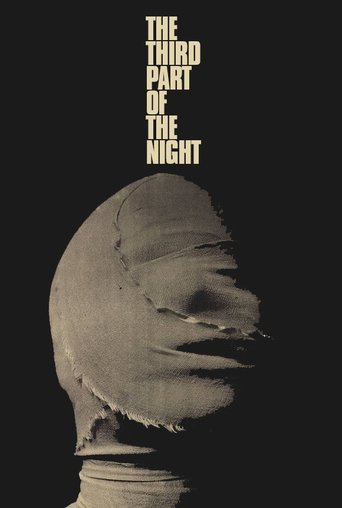
Diary Entry forThe Third Part of the Night

Habrá un día en que los hombres buscarán la muerte y no la hallarán; desearán morir, pero la muerte huirá de ellos. Spanish: El cine de Andrzej Zulawski es como una inyección de serotonina. Me fascina totalmente, pero sobre todo me sorprende que desde su debut ya fuera evidente un manejo de cámara frenético y maravilloso, capaz de retratar la paranoia, el delirio, la culpa, el duelo y el terror psicológico que brotan del trauma en un joven de 22 años que presencia una masacre que lo deja atrapado en una pesadilla muy surreal a lo tipo After Hours, pero situada en una Polonia alienante, fría, desolada e invadida por los nazis. Una atmósfera teñida de ceniza, reflejo de la crueldad, de la destrucción y la tragedia que significó tal suceso bélico, pero filmado con una maestría que cautiva y aterroriza. Él tenía ese talento casi sobrenatural para crear experiencias inquietantes e inmersivas. Aquí, particularmente, con una banda sonora que complementa de forma asombrosa una dirección magnética y cautivante, llena de elementos místicos y percutivos algo jazz. La música es una mezcla clásica de psych-rock experimental, algo fantastica e hipnótica, que me recordó al vibe de After Hours, haciéndote sentir atrapado en un sueño que se deshace frente a ti y refuerza ese torbellino interior donde memoria, visión y realidad se confunden para intensificar la sensación de caída libre. “Es desgarrador recordar cómo el mundo solía ser un lugar mejor” Es admirable cómo una ópera prima puede ser tan sólida. Żuławski ya mostraba aquí las semillas de su gran obra maestra, Possession: el frenesí de cámara, el caos emocional, la espiritualidad rota, la metáfora bíblica, la exploración del trauma y la desintegración mental, pero menos brutal y sin gritos desalmados. Y aún así, el director trasciende todas las nociones preconcebidas de lo que el cine puede ser, tanto como forma de arte como vehículo para proclamaciones políticas, sociales y religiosas. "Así no se puede. Debe haber justicia. Dios mío. Debe existir una comunicación entre nosotros y Dios, debe haber un grito que libere el alma de esta región, una llamada." Desde el inicio, con ese pasaje del Apocalipsis donde el primer ángel hace sonar la trompeta y anuncia la lluvia de fuego y destrucción que cae sobre la tierra, la película te agarra del cuello y no te suelta; está llena de irrupciones violentas y dislocaciones absurdas que rodean al protagonista desconcertado, bajo la presencia de parásitos que drenan su sangre y de fantasmas que reviven su pasado. Y aunque muchas de las cosas que pasan son algo extrañas, la historia se basa en hechos reales: Żuławski se inspiró en las experiencias que vivió su padre durante la guerra. Me encanta cuando un director me hace moverme a través del mundo que crea, de una manera muy sutil, pero provocadora. Żuławski estructura la narración como un laberinto de símbolos, un territorio de pasillos, puertas y escaleras que funcionan casi como portales entre realidades. Y realmente no importa tanto lo que ocurre, sino cómo se deforma la percepción bajo el peso de la culpa y la devastación. Es una realidad tan alterada, invadida por doppelgängers, trampas y "agujeros de gusano", que queda abierto el debate sobre qué es lo que ha ocurrido realmente. Él tiene una visión muy particular, a veces abrasiva y pretenciosa, pero usualmente eficaz para generar terror o provocar una inquietud retorcida, cercana a Kafka o Borges en esa forma de convertir la confusión en una experiencia espiritual. Nadie me va a sacar de la cabeza que la escena donde corre a través de los túneles es una referencia a The Trial (1962). “Solo eres tú quien ve algo que no existe” A medida que avanza, el protagonista va perdiendo la razón: las alucinaciones, las visiones, los dobles, todo crea un retrato macabro de cómo la guerra destruye la mente y convierte la fe, la bondad y la misericordia en polvo. Cuando la noche caiga sobre la tierra, los hombres caminarán sin reconocer su propio rostro. Żuławski transforma el mundo interior del personaje en un infierno psicológico donde "nada muere", pero todo se descompone; donde la mente queda atrapada, repitiéndose a sí misma como una condena eterna. Para Żuławski, la guerra pulveriza el espíritu y reduce al ser humano a una cáscara vacía, erosionada por dentro. Los sobrevivientes quedan estancados en una especie de purgatorio como almas que corren sin posibilidad de una redención que permita despertar de la pesadilla. Cuando la carne está podrida y la sangre está contaminada, lo único que queda es la crueldad, y nos recuerda que el infierno no está bajo tierra, sino en la mente de quienes vivieron para contarlo. Porque incluso el amor, ese último vestigio de humanidad, se vuelve fugaz en medio del horror: “El amor nos toma por sorpresa y se nos escapa entre los dedos como si fuese agua”. Sin duda alguna es de mis directores favoritos y eso que únicamente he visto hasta ahora dos de sus películas, pero ambas son desconcertantes, depresivas e inspiradoras al mismo tiempo. Retrata la enfermedad, el caos, la muerte y la putrefacción espiritual con una cámara temblorosa y errática; visceral y emocionalmente abrasiva en atmósferas claustrofóbicas que provocan horror. De verdad que les recomiendo un montón su cine, pero si no están familiarizados, pueden empezar con su obra más popular: POSSESSION (https://boxd.it/bkya7R). Quizá este exterminio sea como una plaga, enviada para hacer que las personas comprendan el sentido de sus vidas. PD: Definitivamente, SE VIENE MARATON de su filmografía!!! pero antes hago la reseña de Bugonia y No Other Choice que ya me las vi. Anterior: Indiana Jones and the Temple of Doom (1984) (https://boxd.it/bNunlv) Siguiente: No Other Choice (2025) (https://boxd.it/bT5u6V) --------------------------------------------------------------- “There will come a day when people will seek death and not find it; they will long for it, but death will flee from them.” English: Andrzej Żuławski’s cinema hits me like a serotonin injection. I’m completely fascinated by it, but above all, I’m stunned by how, from his debut, he already displayed this frantic, marvelous command of the camera: a way of capturing paranoia, delirium, guilt, grief and the psychological horror that bursts from trauma. A 22-year-old man witnesses an atrocity and becomes trapped inside a surreal nightmare—something almost After Hours-like, but set in an alienating, cold, desolate Poland under Nazi occupation. A world dusted in gray, reflecting the cruelty and devastation of war, yet filmed with a mastery that both mesmerizes and terrifies. He possessed an almost supernatural talent for crafting unsettling and immersive experiences. Here, especially, the score works hand-in-hand with a magnetic, hypnotic direction full of mystical overtones. The music—classical, slightly fantastical—reminded me of the After Hours vibe: it makes you feel as if you’re stuck inside a dream that’s dissolving in front of you, amplifying that inner whirlwind where memory, vision, and reality blur together in free fall. “It’s heartbreaking to remember the world used to be a better place.” It’s incredible how strong a debut feature can be. Żuławski was already planting the seeds of Possession: the frenzied camera, the emotional chaos, the fractured spirituality, the biblical metaphors, the exploration of trauma and mental dissolution, but in a slightly less brutal form and without raw screams. And he already transcends preconceived notions of what cinema can be: both as work of art and as a vehicle for political, social and religious proclamations. "This can’t go on. There must be justice. My God. There must be a connection between us and God — a cry that frees the soul of this land, a calling." From the opening —with that passage from Revelation, where the first angel sounds the trumpet and unleashes a rain of fire and destruction upon the earth— the film grabs you by the neck and never lets go. It’s filled with violent ruptures and absurd dislocations surrounding a bewildered protagonist, haunted by parasites that drain his blood and ghosts that resurrect his past. And even if many events feel strange, the story is grounded in real life: Żuławski drew from his father’s experiences during the war. I love when a director makes me move through the world he creates subtly, but provocatively. Żuławski shapes the narrative like a labyrinth of symbols, a terrain of corridors, doors, and staircases that function almost like portals between realities. And what happens matters less than how perception bends under the weight of guilt and destruction. It’s a reality so distorted—invaded by doppelgängers, trapdoors, and wormholes—that the question of what “really” happened remains open. He has a particular vision: abrasive, sometimes pretentious, but often incredibly effective at summoning fear or provoking a twisted, uneasy fascination. There’s something Kafkaesque or Borgesian in the way he turns confusion into a spiritual experience. And no one will convince me that the scene where he runs through the tunnels isn’t a nod to The Trial (1962). “It’s only you who sees something that isn’t there.” As the film progresses, the protagonist steadily loses his grip on reality. The visions, the hallucinations, the doubles: they all create a macabre portrait of how war breaks the mind and grinds down faith, kindness, and mercy. “When night falls upon the earth, people will walk without recognizing their own face.” Żuławski transforms the character’s inner world into a psychological hell: not a place where things die, but where everything unravels; where the mind loops endlessly on itself, as if trapped in an eternal sentence. For Żuławski, war pulverizes the spirit, reducing human beings to empty shells, hollowed out from within. Survivors return to a sort of broken purgatory, like souls running without the possibility of redemption, unable to wake up from the nightmare. And when flesh rots and blood is contaminated, all that remains is cruelty; he remains us that hell isn't underground, it's in the minds of those who lived to remember. And even love, humanity’s last fragile thread, becomes something fleeting in the midst of horror: “Love catches us off guard and slips through our fingers like water.” Without a doubt, he’s already one of my favorite directors, and that’s only after seeing two of his films so far. But both are bewildering, depressive, and inspiring at the same time. He portrays disease, chaos, death, and spiritual decay with a spasmodic, slightly shaky and erratic camera; visceral and emotionally abrasive, all within claustrophobic atmospheres that evoke horror. I truly recommend his cinema a lot, but if you’re not familiar with him yet, you can start with his most popular work: POSSESSION (https://boxd.it/bkya7R). Perhaps this extermination is like a plague, sent to make people realize the meaning of their lives. Previously: Indiana Jones and the Temple of Doom (1984) (https://boxd.it/bNunlv). Next: No Other Choice (2025) (https://boxd.it/bT5u6V)
Other Diary Entries forThe Third Part of the Night

The Third Part of the Night
the harrowing images is so grotesque however the satire is simply confusing at the times if you don't really pay attention upon the story

The Third Part of the Night
“I can’t be close to you without suffering.” For what is Andrzej Żuławski’s first feature film, The Third Part of the Night does a good job at displaying his cinematic style so early on in his career. Equal parts horrifying and cerebral, Andrzej Żuławski’s film paints a pretty grim world similar to our own with an underlying nightmarish atmosphere that takes place in Nazi-occupied Poland – a very real and pertinent horror meets an existential one. From a technical perspective, The Third Part of the Night is a genuine marvel – much praise is to be given to cinematographer Witold Sobocinski, and his truly omniscient camerawork for this project. From its set design to costuming, along with the haunting free-form jazz that scores this feverish world, it all amounts to an incredibly unforgettable experience. Not to say I did not find any issues with this film, mainly having to do with the hard to follow narrative. The biggest issue I had with connecting with the story is that it requires some pretty obscure context about WWII, the typhus vaccine, and the “coveted” job of louse-feeder – it is safe to say there is a lot that will go over the viewers head, especially when it is delivered in such an obtuse and abstract manner. While I am usually a fan of this type of direction, it started to become a little grating for me as my mind began to wander while I passively finished the film. Nowhere near as memorable as his masterpiece,Possession, but far from the worst thing I have ever seen – albeit, a tad boring. •【 Watched in 2022 Ranked 】 (https://boxd.it/eMxr8)
Sign in to track, rate and review films
Sign in to track, rate and review films
