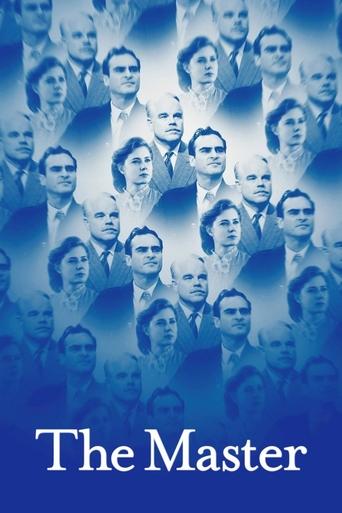
Diary Entry forThe Master

English: Among the best films by the chameleonic genius Paul Thomas Anderson, The Master is perhaps the most visually stunning, in terms of light, color, and composition. There are truly countless meticulously crafted shots, like the one where Freddie runs wildly across the field, and many others aboard the boat. The film opens with an almost devouring blue of water as its backdrop, guiding us toward what, in my view, symbolizes the traumatic savagery of withdrawal, the horrors of war, and the difficult readjustment to postwar society in the 1950s. If One Battle After Another is his most accessible work; this one feels like the least accessible—at least of the ones I’ve seen—because of its structure and the way this whirlwind is narrated: slow, hypnotic, yet utterly captivating, like navigating an open sea where the human collides with the spiritual, desire clashes with discipline, and freedom blurs into submission. Freddie, played by an erratic and visceral Joaquin Phoenix, is a heavy-drinking World War II Navy veteran carrying post-traumatic stress disorder, with a strangely cheerful yet fractured personality, lost in constant denial of what consumes him from within. Into this drift steps Lancaster Dodd, portrayed by the splendid and magnetic Philip Seymour Hoffman—a multifaceted man who calls himself a writer, doctor, philosopher, and even a scientist, but above all defines himself as an insatiably curious human being. His charisma is enveloping and unsettling, his speech swinging between paternal and authoritative, revelatory and enigmatic. To Freddie, Dodd becomes a figure of guidance and power, someone who promises answers in a world that seems devoid of them, yet whose eloquence subtly reveals the fragility of a "new religion's" leader whose influence relies as much on the faith of others as on his own need to be followed. What fascinates me most is how their relationship becomes the axis of the story: two opposite poles that nonetheless pull toward each other with magnetic force. One is pure chaos, a broken, unstable man ruled by impulses; the other, a figure of authority, seemingly holding all the answers, yet faltering in despair in the face of every doubt arising from his community. In this constant clash between master and disciple, between human and wild animal, the film reaches its climax, leaving the impression that, more than a guiding bond, what exists is a mirror in which both see themselves reflected. One of my favorite scenes emerges from this dynamic: when Dodd puts Freddie through a rapid-fire question exercise, demanding answers without a single blink. What begins almost like a game turns into a brutal exposure of his psyche, where Dodd quickly recognizes in Freddie both a disciple and an experiment. We watch Freddie's evasions crumble, his nervous laughter morph into raw confessions exposing guilt, fears, and contradictions that have haunted him for years—but also desires and fleeting moments of happiness. This tense, claustrophobic sequence is the heart of The Master: an intimate duel where the camera seems hypnotized by faces, where every breath and silence explodes into tears and truths that, for a moment, bring the character an unexpected release. Even more fascinating is the regression scene, midway through the film, where Dodd explains to one of his followers: “This is you, in this moment, 1950. What you saw was your spirit in another body, in another time.” It's pure gold, emphasizing the insistence on reliving trauma until it loses its power—facing it as the only path to true healing. I couldn't stop thinking about how true it is: if we avoid pain, it lingers, rotting inside; only by facing it can we grow. And yes, it hurts—but it's a finite, passing pain, the small price of liberation and true happiness. Otherwise, we allow ourselves to be consumed by torment that never fades, trapped in a prison that slowly corrodes and wears us down in silence. From this point, the conversation becomes even more fascinating: past lives, pathologies with ancient origins, the mind as a record of mistakes waiting to be corrected. Looming in the background is also the shadow of what could become a cult —a man claiming he can eliminate war, poverty, and even nuclear annihilation through his method. The unsettling truth is how something presented as a path to healing can also become dogma and manipulation. I love the metaphor of memory as a river: when you round a bend, what’s left behind disappears from view, yet never truly vanishes. The film links this idea to dreams, which, in their fragmented and mysterious nature, can feel like memories from another life. Some dream in black and white, others in color; some remember details with pinpoint precision, others barely at all. I've had dreams so vivid, with unknown faces and situations far removed from my daily life, unfolding in times distant from the present, yet they feel as real as waking life. If dreams were just a compilation of everything we've seen in life or movies, how do we experience sensations of things we've never lived? And when they actually happen in reality, why do they feel exactly like in the dream? This mystery resonates deeply with what the film suggests: perhaps many of our fears, afflictions, and traumas don't come from this life, but from a previous one. Maybe that's where the roots of what we carry today lie. I love that a film can take me to these reflections. While science has its limits, some human experiences escape any rational explanation. And that is exactly the door The Master opens: the possibility that who we are today is shaped by wounds from other times. The Jonny Greenwood's score, meanwhile, pulses like a heartbeat through every fiber, and the camera captures Phoenix and Hoffman at the edge of the abyss: one uncontrolled, raw, animalistic; the other contained, intellectual, paternal, manipulative. I loved the 1950s aesthetic. It reminded me of Phantom Thread in costume and staging, though PTA handles the camera differently here: less frenetic than in Boogie Nights or Magnolia, but not as static as in Phantom Thread or There Will Be Blood. Some focus shifts felt unusual, yet the subtlety in every movement is impressive. The ending surprised me. PTA’s finales rarely hit this hard—except in There Will Be Blood or Phantom Thread—but here it felt powerful. That song Dodd sings to Freddie, that intimate confession that maybe in another life they had already met, is beautiful and also a bit disturbing. Everything gains even more weight with Dodd’s words: “If you figure a way to live without serving a master, any master, then let the rest of us know, will you? For you'd be the first person in the history of the world.” A interesting confession, encapsulating the paradox of his philosophy: he needs a disciple just as Freddie needs guidance, and both consume each other in this complex dynamic. “If you leave me now, in the next life you will be my sworn enemy. And I will show you no mercy.” This is a reminder that some human bonds defy logic, and that intensity—complex yet fragile—is what makes The Master magnificent, even in its imperfections, showing how easy it is to be deceived in moments of vulnerability and how the search for guidance or help can turn into manipulation or imbalanced power dynamics, where one becomes biased, willing to lash out at anyone who dares to question their leader's ideas. This dynamic can even be seen as a breaking point for Freddie's freedom: the chance to become his own master, his own guide, but that freedom remains only hinted at, a barely perceptible possibility. So was he ever truly free? I rated it between 3.5 and 4 stars because the structure and pacing didn't fully convince me, but the scenes and dialogues are so strong that they tip the scales. However, the more I think about this film, the more I notice how complex Dodd is as the leader of this cult, and the devastating consequences that has for the traumatized Freddie. In the end, The Master isn't just a film about a master and his disciple, it's about what it means to be human: our contradictions, fragilities, deepest desires, and fears. A story of mirrors, where we seek guidance, confront pain, and see ourselves reflected in others. Every shot, line, and beat of the soundtrack reminds me that life is complex, that pain and liberation coexist, and that sometimes we can only understand ourselves by looking face-to-face at what challenges us most. Moreover, it reveals how the influence of a charismatic and manipulative leader can take advantage of your vulnerability, profit from your suffering, and care only insofar as it reinforces their control and power, rather than your real progress or healing, using methods that may well be fraudulent. Though it may feel slow and dense, The Master is alive, breathing with its layered characters, forcing us to question and reflect on who we are and what we carry. It's not accessible, but it's incredible and thought-provoking. And that, to me, is the true greatness of Paul Thomas Anderson. --------------------------------------------------------------- Spanish: Dentro de las mejores películas del genio camaleónico Paul Thomas Anderson, The Master es quizás la que luce más hermosa en cuanto al uso de la luz, el color y los encuadres. De verdad, hay muchas tomas hermosas, como esa donde Freddie corre desenfrenadamente por el campo y muchas otras en la embarcación. La película abre con un azul devorador del mar como telón de fondo para guiarnos a lo que a mi parecer simboliza el salvajismo traumático de la abstinencia, de las atrocidades de la guerra y la complicada adaptación a la sociedad posguerra en los 50. Si One Battle After Another es su obra más accesible, esta se siente como la menos accesible —al menos de las que he visto—, debido a su estructura y la forma en cómo se narra este torbellino: algo lento, hipnótico y desconcertante, pero muy fascinante y atrapante que parece navegar en un mar abierto donde lo humano se confronta con lo espiritual, donde el deseo choca con la disciplina y la libertad se confunde con la sumisión. El protagonista, Freddie, interpretado por un Joaquin Phoenix errático y visceral, es un veterano de la marina con trastorno de estrés postraumático y una personalidad extrañamente risueña pero quebrada, perdido en el alcohol y la constante negación de lo que lo consume por dentro. En medio de esa deriva aparece Lancaster Dodd, interpretado por un espléndido y magnético Phillip Seymour Hoffman, un hombre multifacético que se autoproclama escritor, doctor, filósofo y hasta científico, pero que ante todo se define como un ser insaciablemente curioso. Su carisma es inquietante, pero envolvente, con un discurso que oscila entre lo paternal y lo autoritario, lo revelador y lo enigmático. Frente a Freddie, se erige como una figura de guía y poder, alguien que promete respuestas en un mundo que parece carecer de ellas, pero que en su oratoria deja entrever la fragilidad de un líder que edifica su influencia tanto en la fe de los otros como en su propia necesidad de ser seguido. Lo más fascinante es cómo la relación entre ambos se convierte en el eje del relato: polos opuestos que, sin embargo, se atraen magnéticamente. Uno es descontrol absoluto, un hombre roto, inestable y dominado por sus impulsos; mientras que el otro es la autoridad que aparenta tener todas las soluciones, pero que también tambalea en la desesperación frente a cada pensamiento de duda proveniente de su comunidad. En ese choque constante entre maestro y discípulo, amo y animal salvaje, sanador y rata de laboratorio, la película llega a su climax, dejando la sensación de que, más que un vínculo guía, lo que existe es un espejo en el que ambos terminan viéndose reflejados. De ahí surge una de mis escenas favoritas: cuando Dodd somete a Freddie a ese tratamiento de preguntas rápidas que debe contestar sin pestañear. Lo que empieza casi como un juego termina siendo una apertura brutal de su psique, donde Dodd reconoce rápidamente en Freddie tanto un discípulo como un experimento. Vemos cómo las evasivas de Freddie se quiebran progresivamente, cómo su risa nerviosa muta en confesiones descarnadas que exponen culpas, miedos y contradicciones que lo persiguen desde siempre, pero también anhelos e instantes de felicidad. Esa secuencia, tensa y claustrofóbica, es el corazón de The Master: un duelo íntimo donde la cámara parece hipnotizada por los rostros, donde cada respiración y cada silencio estallan en lágrimas y verdades que, por un instante, parecen traer a los personajes una liberación inesperada, casi como una paz abundante. Y aún más me fascina la escena de la regresión, que aparece hacia la mitad de la película, donde Dodd le explica a uno de sus seguidores: “Este eres tú, en este momento, 1950. Lo que viste fue tu espíritu en otro cuerpo, en otro tiempo” Ese diálogo es oro puro, donde resalta la insistencia en revivir un trauma hasta despojarlo de su poder, enfrentarlo como único camino de sanación; realmente me quedé pensando en lo cierto que es eso: si evitamos el dolor, se queda ahí, atascado, pudriéndose dentro; solo enfrentándolo es posible crecer. Y sí, duele, pero es un dolor finito y pasajero; es el pequeño costo de la liberación y la auténtica felicidad. Lo otro, en cambio, es dejar que nos consuma un tormento que nunca se desvanece y que nos ata eternamente a una cárcel que lentamente nos corroe y desgasta en silencio. A partir de esa escena, la conversación se torna cada vez más fascinante: vidas pasadas, patologías con orígenes antiguos y la mente como un archivo de errores a corregir. En esa confrontación, aparece también la sombra de lo que podría ser un culto: un hombre que asegura eliminar la guerra, la pobreza e incluso la amenaza nuclear con su método. Lo inquietante es cómo algo que se presenta como camino de sanación también puede transformarse en dogma y manipulación. Entre todo eso, me encanta esa metáfora del viaje a través de la memoria como navegar un río: al girar en una curva, lo que dejamos atrás deja de verse, pero nunca desaparece. La película conecta indirectamente esa idea con los sueños que, en su carácter fragmentado y misterioso, también pueden sentirse como memorias de otra vida. Algunos sueñan en blanco y negro, otros a color; unos recuerdan detalles con una precisión milimétrica, otros apenas entre lagunas. En mi experiencia, he tenido sueños tan vívidos, con rostros desconocidos y situaciones ajenas a mi vida cotidiana, que se desarrollan en tiempos muy aislados al presente, que sin embargo se sienten tan reales como la vigilia. Si los sueños fueran únicamente un recopilatorio de todas cosas que hemos visto en la vida real o en películas, ¿cómo es que experimentamos sensaciones tan reales con cosas que jamás hemos vivido? Y cuando al fin suceden en la realidad, ¿por qué se sienten exactamente igual que en el sueño? Ese misterio conecta muchísimo con lo que plantea la película: que quizá muchos de nuestros miedos, aflicciones o traumas no provienen de esta vida, sino de algo anterior. Quizá allá esté la raíz de lo que cargamos hoy, quizá en nuestros sueños esté la respuesta a todas nuestras aflicciones. Me fascina que una película me lleve a estas reflexiones, porque si bien la ciencia tiene sus límites, lo cierto es que hay experiencias humanas que se escapan de cualquier explicación racional. Y esa es justamente la puerta que abre The Master: la posibilidad de que lo que somos hoy esté marcado por heridas de otros tiempos. Por otra parte, la banda sonora de Jonny Greenwood martilla como pulsos que atraviesan cada fibra y la cámara capta de manera quirúrgica a un Phoenix y Hoffman que se entregan al borde del abismo: uno descontrolado, crudo, animal; el otro contenido, intelectual, paternal y manipulador. La estética de los 50 también me encantó. Me recordó a Phantom Thread por el vestuario y la puesta en escena, aunque aquí PTA juega con la cámara de otra manera: menos frenética que en Boogie Nights o Magnolia, pero tampoco tan estática como en Phantom Thread o There Will Be Blood. Algunos cambios de enfoque me resultaron extraños, pero aún así valoro esa sutileza en cada movimiento. En cuanto al final, me sorprendió. Siempre siento que los desenlaces de PTA no suelen ser tan GOD, salvo en There Will Be Blood o Phantom Thread sino se me escapa otro, pero aquí sí lo sentí contundente. Esa canción que Dodd le canta a Freddie, esa confesión íntima de que quizá en otra vida ya se habían conocido, me pareció preciosa y un poco perturbadora. Aunque todo cobra aún más sentido con las palabras de Dodd: “Si descubres la manera de vivir sin servir a ningún amo, a ningún amo en absoluto, asegúrate de contárselo al resto de nosotros, porque serías la primera persona en la historia del mundo.” Una confesión interesante, porque encierra toda la paradoja de su filosofía: necesita un discípulo tanto como Freddie necesita una guía, y ambos se consumen en esa dinámica compleja. “Si me abandonas ahora, en la próxima vida serás mi enemigo y no te mostraré clemencia” Esto nos recuerda que algunas conexiones humanas desafían la lógica, y que esa intensidad —tan compleja como frágil— es lo que convierte a The Master en una obra grandiosa incluso en sus imperfecciones, al mostrar lo fácil que es dejarse engañar en la vulnerabilidad y cómo la búsqueda de guía o ayuda puede transformarse en manipulación o en relaciones de poder desequilibradas, donde uno termina sesgado, dispuesto a violentar a todo aquel que cuestione las ideas de su líder. Esta dinámica incluso puede verse como un punto de quiebre para la libertad de Freddie: la posibilidad de ser su propio maestro y su propia guía, pero esa libertad solo queda insinuada, una posibilidad apenas perceptible, entonces fue realmente libre o no? Estuve entre 3.5 y 4 estrellas, porque la estructura y el ritmo no me convencieron del todo, pero las escenas y diálogos tan buenos inclinan la balanza. Entre más pienso en esta película, noto lo complejo que es Dodd como líder de esta secta y las consecuencias nefastas que eso significa para el traumatizado. Al final, The Master no es solo una película sobre un maestro y su discípulo, sino sobre lo que significa ser humano: nuestras contradicciones, fragilidades, anhelos y miedos más profundos. Una historia de espejos donde buscamos guía, nos enfrentamos al dolor y nos reflejamos en otros. Cada plano, cada diálogo, cada pulso de la banda sonora me recuerda que la vida es compleja, que el dolor y la liberación conviven, y que a veces solo podemos entendernos al mirar cara a cara aquello que más nos desafía. Además, se incinúa cómo la influencia de un líder carismático y manipulador puede aprovecharse de tu vulnerabilidad, lucrarse de tus padecimientos y preocuparse solo en la medida en que eso refuerza su control y poder, más que tu progreso o sanación real con métodos que posiblemente sean un fraude. Y aunque se sienta un poco lenta y densa, The Master se siente viva, respira con personajes multicapa e interesantes de estudiar, nos obliga a cuestionarnos y reflexionar sobre lo que somos y lo que cargamos. No es tan accesible, pero sí es increíble, provocadora y estimulante. Y eso, para mí, es la verdadera grandeza de Paul Thomas Anderson. Pd: Dios mío, lean esta reseña (https://boxd.it/2jLLI1) que leí recientemente, está buenísima.
Other Diary Entries forThe Master

The Master
One of the greatest casts ever assembled, The Master is a beautiful films with real story telling and amazing cinematography. The story keeps you interested throughout and keeps you guessing, my reading is that the master is a fraud who couldn’t conquer the character of Freddie, played brilliantly by Joaquin Phoenix, who thrives in these sort of roles. Fantastic film.
The Master
A marvelous, distancing film. I am removed from the happenings, but I am still sprawled in the craft of it all. Love watching the performances and compositions roll by. All one big Freudian shi-, er slip, which only further entrenches us in that 50's space of pseudoscientific inquiry and post-war unraveling. But I'm slopping around in all that beautiful contrast, the prolonged gazes, the cross-sectioning of cult life. Having a good ol' time with it once again.
The Master
a direção, a fotografia e as atuações são incríveis, mas até agora esse foi o meu menos favorito da maratona PTA, acho que o filme é um pouco mais devagar que os anteriores da filmografia dele, o que me fez ficar menos envolvido na história

The Master
I really liked this film. Is it my new favorite PTA? Unfortunately no, but this man has provided me with more than enough perfect movies so I’ll try not to be greedy. This was the sixth film of Paul Thomas Anderson’s I’ve seen, so I thought I’d know what to expect going in. Even with my least favorite of his work, Licorice Pizza, I had an immediate, deep, and obstinate emotional reaction to the piece. This was not the case with The Master. I watched it last night and it’s the longest I’ve spent mulling over an Anderson film. I think what makes me love Anderson’s movies so much is his ability to take his flawed protagonist (and they are always deeply, deeply flawed), and make me understand them and love them. The Master is the most impersonal film of PTA’s I’ve watched thus far. And while I’m aware that this is a reflection of the story’s protagonist, I don’t think I enjoyed being kept at arm’s length for the entirety of the film. There are glimmers of Freddie’s psyche, great glimmers, but weirdly enough I felt like I understood the character less and less the more time I spent with him. Was this purposeful? Typically, I find the endings of PTA films so emotionally charged, but I didn’t experience that with The Master because I didn’t feel confident in my interpretation of the character. I tend to love characters that are “lost,” but Freddie Quell is such an enigma to me that while I could certainly sympathize with him, I never loved him. Maybe it’s simple: those who don’t want to be helped, won’t be. But I can’t help but think, or maybe hope, that there is something more that I’m missing. That all sounds pretty negative, but I did truly think this was great. Beautiful, witty, and probably contains the best acting I've seen in a PTA film. I’ll be thinking about Freddie’s first processing session for a long, long time. Phillip Seymour Hoffman was easily the best part of this film, a generational talent, and is deeply missed.
Sign in to track, rate and review films
Sign in to track, rate and review films
