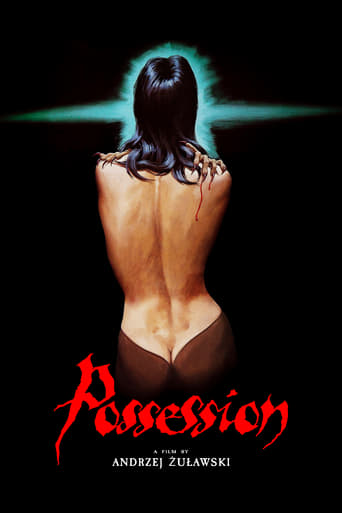
Diary Entry forPossession

I want to love this a lot more than I did and I can’t quite figure out why I didn’t love it. There are some scary scenes here and there, but overall I didn’t find it very scary. The subway scene is the best for me, and Isabelle Adjani gives a truly special performance. I admire a lot about this film, and it’s critique of a failing relationship is clever and unique, I just wish I enjoyed this more.
Other Diary Entries forPossession

Possession
it's like a wild dream, It's just awesome cinema, really.
Possession
insano nunca mais assisto de novo

Possession
"La oscuridad es relajante y la tentación de soltar promete mucho consuelo después del dolor" Spanish: ¡Qué locura acabo de ver! Me encantó. Comienza siendo un drama familiar muy inteligente que se torna en algo tan increíblemente extraño y perturbador que no me resulta una sorpresa que haya sido tan censurada y controversial para su tiempo. Una visión singular e inolvidable del horror psicológico y doméstico, llena de paranoia, celos y de una presencia monstruosa en espacios escalofriantes. Las actuaciones son alucinantes. Isabelle Adjani encarna a la perfección a una mujer completamente poseída en plena crisis matrimonial. Es hermosamente inquietante, manipuladora, con una mirada de ángel que no mata ni una mosca, pero con un alma podrida que lidera intenciones terribles. Su actuación es tan surreal que resulta desgarradora y triste al mismo tiempo; transmite locura, soledad, confusión y autodestrucción. Anna:“No puedo existir sola porque le tengo miedo a mí misma, porque yo soy la creadora de mi propio mal.” Está atrapada en un agujero de conejo, mientras hace de sí misma una supernova: un agujero negro que se traga todo a su paso debido a su naturaleza autodestructiva. Va en un tren de sobrepensamiento que la hace sentirse sola, herida, mentirosa, traidora e inmoral. Su esposo, interpretado por Sam Neill, no se queda atrás. Brinda una actuación igual de frenética, lunática, desoladora, seductora y agresiva que la de Adjani. Es como si toda esa locura fuera contagiosa, degradando cada parte de sí como un parásito. Sus interpretaciones no solo están a la altura de los personajes que encarnan, sino que también los desarrollan de manera abismal, proporcionando pequeñas dosis de trasfondo mientras exploran su psique con elementos surrealistas y macabros que nutren toda esta metáfora asquerosamente aterradora de una crisis matrimonial que corroe como un cáncer todo a su paso. Mark: “El amor no es algo que puedas cambiar de canal en canal.” Es terrible cómo algo "tan puro" como el amor puede retorcerse hasta convertirse en algo completamente opuesto, como el odio. Cómo lo que antes te daba calma ahora te enferma. Y claro, es normal que una relación llegue al punto donde la llama se apaga, porque no todo puede ser un clímax constante; hay subidas y bajadas, como todo en la vida. Pero cuando esa falta de deseo se mezcla con el sobrepensamiento, con el dilema y la ausencia de respuestas, todo se vuelve una tortura. Possession muestra justo eso: dos personas que alguna vez se amaron, ahora atrapadas en su propia desesperación. Él trata de entender y exige respuestas que ella no puede —o no quiere— dar. Sin embargo, ella decide hundirse más en su vacío, mientras él busca averiguar los secretos que esconde. Todo se convierte en un ciclo de violencia, incomprensión y locura. Es abrumador, porque hay algo en esa autodestrucción que se siente demasiado real, lo que lo hace aún más perturbador e impactante, sobre todo para los hijos, que experimentan este tipo de situaciones en carne propia. Por otra parte, me encanta lo sutil que son los diálogos, porque no te gritan todo en la cara (irónico, considerando que pasamos buena parte de la película viendo a Adjani gritar como poseída, exorcizada o cualquier palabra demoníaca que se te ocurra). Esa sutileza me fascina, sobre todo porque complementa de manera grandiosa esas actuaciones tan esquizofrénicas. También me encanta cómo juegan con los close-ups en los momentos de mayor tensión. Es como si los personajes mantuvieran cierta vibra, ciertas emociones y actitudes que encajan perfectamente con el contexto, pero cuando la cámara se acerca a sus rostros, todo se distorsiona y aparecen nuevos matices. Lo que antes parecía coherente se vuelve caótico: si estaban tristes, ahora sonríen; si estaban calmados, ahora se desquician. Y ese contraste es sutil, pero brutal, ya que hace que se sientan más intimidantes. En este sentido, me gusta mucho cómo el director mueve la cámara a través de las paredes y se acerca a los personajes, haciendo que sientas que estás presenciando algo profundamente alienante. También me encanta cómo juega con este espacio atemporal y berlinesco, que configura una atmósfera ordinariamente abandonada, aparentemente inofensiva, pero que en su interior esconde algo completamente profano y siniestro. Hay planos amplios en lugares cerrados, y amo desenfrenadamente la fluidez de la cámara en cada uno de estos espacios. La escena de la moto, pasando por los pasillos entre los edificios, que desencadena la penúltima caída de Mark, está rodada con una maestría impresionante. Junto a la escena del metro —que esa la tocaré más adelante— me parecen wow. A nivel técnico me parece increíble, porque mediante las actuaciones, la dirección y la música logra generar emociones incómodas y explosivas. Eso le da un encanto casi premeditado y sensorialmente calculado. Heinrich: No hay nada que temer, salvo a Dios, sea lo que eso signifique para ti. Mark: Para mí, Dios es una enfermedad. Heinrich: Por eso, a través de una enfermedad podemos alcanzar a Dios. Sobre los temas de la fe y del azar, que son pilares fundamentales para ese descenso desgarrador y psicótico a la locura de la protagonista, siento que la película muestra cómo la incertidumbre puede llevarte a perder la razón, sobre todo cuando vives ansioso por lo que pueda pasar o careces de respuestas. La fe implica confiar, y en ese sentido es lo opuesto al azar, aunque ambos pueden coexistir. Puedes ser consciente de que todo es una posibilidad y que todo es posible, pero al mismo tiempo saber que depende tanto de ti como de múltiples factores externos que eso ocurra. Y ahí es donde entra la fe: creer en medio del caos. No son opuestos irreconciliables, sino fuerzas que se complementan. Y la película, de manera ambigua, lo retrata como algo que la doma, algo que puede salir o entrar de su cuerpo como materia. Anna: “Bueno, es como si existieran dos hermanas: la Fe y el Azar. Mi Fe no puede excluir al Azar, pero mi Azar no puede… no puede explicar la Fe. Mi Fe no me permitió esperar al Azar, y el Azar no me dio suficiente Fe. Y entonces leí que la vida privada es un escenario, solo que yo interpreto muchos papeles que son más pequeños que yo, y aun así los represento, los sufro, los creo, y los soy! Pero al mismo tiempo sé que hay una tercera posibilidad, como el cáncer o la locura. Pero el cáncer o la locura deforman la realidad.” Realmente estaba tan aturdido de tanto grito que metía Adjani… todo era turbio, perturbador, inquietante, asqueroso, oscuro. No sé si es un 5, porque si bien a nivel técnico es una maravilla, siento que el tema de la fe, del azar y de Dios, puede llegar a sentirse algo aleatorio o inconexo, como si no terminara de ligarse con claridad a simple vista. Pero dios mío, esa escena donde ella le confiesa parte de su crisis a su esposo, pero en vez de palabras te muestran una secuencia larga sin cortes, debajo del metro. Una escena super perturbadora, desgarradora y miserable. Literalmente parecía un exorcismo. Era una completa locura: gritos por todas partes, su cuerpo temblando, y de repente le comenzaba a salir materia con sangre y era como “¿qué?”. Esa cosa era muy surreal y siniestra, con tintes de ciencia ficción y horror. Literalmente me encantó, aunque estaba totalmente aterrorizado, pero al mismo tiempo impactado y con ganas de reírme de lo grotesco y raro que era todo lo que estaba viendo. La película toca temas que te hacen pensar, pero a veces sí pueden sentirse algo desordenados. Tal vez algunas ideas no están del todo bien desarrolladas, o quizá simplemente se sienten confusas a propósito, pero eso me gusta. En este tipo de situaciones hay dos maneras: o explicas todo, o dejas que el espectador lo interprete. Y yo creo que aquí optaron por la segunda. Para algunos, eso puede ser frustrante; para otros, fascinante. En lo personal, me encanta ese grado de ambigüedad, aunque entiendo a los que dicen que puede llegar a sentirse algo superficial en sus aspectos más abstractos, filosóficos o “thought-provoking”. Sin embargo, en cuanto al drama de pareja, el trasfondo de los personajes y toda esa exploración emocional, está hecho con una maestría impresionante. La dirección me parece una auténtica maravilla. Esta película me dejó con la sensación de querer seguir indagando, pensando, metiéndome más en la trama y tratando de entenderla, porque lo que vi fue una locura tan psicótica como desagradable. Completamente recomendada. Puede que no sea para todos, pero para mí es increíble, porque es una película que se siente más de lo que se entiende. Te deja exhausto, confundido, fascinado. Y aunque no tenga sentido en muchos momentos, todo se siente tan humano que asusta. Anna: ¿Crees en Dios? Mark: ¿Dios? Anna: Está dentro de mí. A ★★★★½ review of Possession by antxlr ₊˚🍂 on Letterboxd (https://boxd.it/bmNPip). Una de mis reseñas favoritas de esta película ever. --------------------------------------------------------------- English: “Oh, yes. I see. Darkness is easeful. And the temptation to let go... promises so much comfort after the pain.” I have no idea what I just watched, but I loved it. It starts as a clever domestic drama and then turns into something so insane and unsettling that it’s no surprise people couldn’t handle it when it came out — censored and controversial in its time. A singular and unforgettable vision of psychological and domestic horror, full of paranoia, jealousy, and a monstrous presence in chilling spaces. The performances are mind-blowing. Isabelle Adjani perfectly captures the madness of a woman possessed, spiraling through the ruins of her marriage. She’s hauntingly beautiful and manipulative, with an angelic gaze that couldn’t hurt a fly — yet a rotten soul driven by terrible intentions. Her performance feels so surreal, heartbreaking, and devastating all at once; she channels madness, loneliness, confusion, and self-destruction with terrifying grace. Anna: “I can’t exist alone because I’m afraid of myself, because I am the creator of my own evil.” She’s trapped in a rabbit hole, becoming her own supernova— a black hole that devours everything around her because of its self-destructive nature. She’s on a train of overthinking that leaves her feeling lonely, wounded, deceitful, treacherous, and immoral. Her husband, played by Sam Neill, is no less extraordinary. He delivers a performance equally frantic, deranged, desolate, seductive, and aggressive. It’s like all that madness was contagious, eating away at him like a parasite. Their performances don’t just match the intensity of their characters — they deepen them, offering small glimpses into their psyche while exploring surreal and grotesque elements that enrich this horrifying metaphor of a marriage rotting away like cancer. Mark: “Love isn’t something you can just switch from channel to channel.” It’s terrifying how something as “pure” as love can twist itself into its complete opposite — hatred. How what once brought you peace now makes you sick and restless. Of course, it’s normal for a relationship to lose its spark; not everything can be an eternal climax. There are highs and lows, like everything in life. But when that lack of desire mixes with overthinking, with dilemmas and unanswered questions, everything becomes torture. Possession portrays exactly that: two people who once loved each other, now trapped in their own despair. He tries to understand and demands answers she can’t — or won’t — give. And she chooses to sink deeper into her void as he digs to uncover her secrets. It becomes a cycle of violence, misunderstanding, and insanity. It’s overwhelming because there’s something about that self-destruction that feels too real, which makes it even more disturbing, especially for the child caught in the middle. On another note, I love how subtle the dialogue is. It doesn’t throw everything in your face (which is ironic, considering how much of the movie we spend watching her scream like she’s possessed, exorcised, or any other demonic term you can think of — she must’ve lost her voice filming this). That subtlety fascinates me because it complements those schizophrenic performances so well. I also love how the camera plays with close-ups during the most intense moments. It’s like the characters carry a certain energy, emotions, and attitudes that make sense in context — but when the camera gets close to their faces, everything distorts, and new shades emerge. If they were sad, now they smile; if they were calm, now they unravel. That contrast is subtle but brutal, because their words suddenly feel more intimidating. In that sense, I love how the director moves the camera through walls, closing in on the characters and making you feel like you’re witnessing something deeply alienating. The setting — a cold, timeless, Berlin-like cityscape — evokes a sense of ordinary abandonment, deceptively harmless on the surface yet concealing something sinister and profane underneath. There are wide shots in tight spaces, and I’m obsessed with how fluid the camera feels in every single one of them. The motorcycle scene — weaving through those narrow passages between buildings— is pure mastery. Along with the subway scene (which I’ll get to later), they’re just wow. Technically, it’s incredible — through performance, direction, and music, it manages to provoke emotions that are raw, ugly, and explosive. It feels deliberately chaotic yet precisely controlled in every sense. Heinrich: “There is nothing to fear except God, whatever that means to you.” Mark: “For me, God is a disease.” Heinrich: “That’s why through a disease we can reach God.” On the themes of faith and chance — which serve as the backbone of the protagonist’s psychotic descent into madness — I think the film shows how uncertainty can drive someone insane, especially when you live anxiously over the future. Faith means trust — and in that sense, it’s the opposite of chance — yet both can coexist. You can be aware that everything is possible, that anything can happen, and still accept that it depends on you and countless external forces. And that’s where faith comes in: believing amid chaos. They’re not irreconcilable opposites, but forces that complement each other. The film ambiguously portrays this as something that tames her, something that can enter or leave her body like matter itself? Anne: “Well, it’s like there are two sisters: Faith and Chance. My Faith can’t exclude Chance, but my Chance can’t… can’t explain Faith. My Faith didn’t allow me to wait for Chance, and Chance didn’t give me enough Faith. And then I read that private life is a stage, only I’m playing many parts that are smaller than me, and yet I still play them, I suffer, I believe, I am! But at the same time, I know there’s a third possibility, like cancer or madness. But cancer or madness distorts reality.” Honestly, I was so overwhelmed by all her screaming… everything felt twisted, disturbing, nauseating, and grotesquely unsettling — pure nightmare fuel. I don’t know if this is a 5-star film, because while technically it’s a masterpiece, the whole theme of faith, chance, and God sometimes feels a bit random or disconnected — like it doesn’t quite tie together at first glance. But god, the scene where she confesses part of her breakdown to Mark, but instead of words, we get this long, uncut subway sequence. A disconcerting, miserable, gut-wrenching scene: her body was shaking, doing creepy as shit physical stuff, screaming everywhere, and then blood, strange pus, vomit, and other shit pouring out of her. I was like, What the hell is going on? It’s surreal, sinister, and nightmarish with touches of sci-fi and horror. I loved it, but I was horrified yet somehow “laughing” at the grotesque absurdity of those scenes. The film dives into heavy ideas that make you think, but sometimes they do feel scattered. Maybe some concepts aren’t fully developed — or maybe they’re meant to feel that way (confusing). Either way, I loved it. With this kind of story, there are two ways to go: either you explain everything, or you let the viewer interpret it. And I think they went for the latter. For some, that can be frustrating; for others, fascinating. Personally, I love that ambiguity, even if I get why some might find it shallow in its more philosophical or thought-provoking aspects. Still, in terms of emotional depth, character work, and pure direction, it’s an absolute marvel. The direction is nothing short of brilliant. This film left me wanting to dig deeper, to think more, to immerse myself in it, and try to make sense of the madness I just witnessed. Because what I saw was psychotic and mesmerizing. Totally recommended. It’s not for everyone, but to me it’s incredible — a film that’s felt more than it’s understood. It leaves you exhausted, confused, and fascinated. And even when it makes no sense, it feels so human it’s terrifying. Anna: “Do you believe in God" Mark: “God?” Anna: “It’s in me.” A ★★★★½ review of Possession by antxlr ₊˚🍂 on Letterboxd (https://boxd.it/bmNPip). One of my favorite review of this film ever.

Possession
The scene in the subway where she laugh and then scream was so fucking amazing
Sign in to track, rate and review films
Sign in to track, rate and review films
