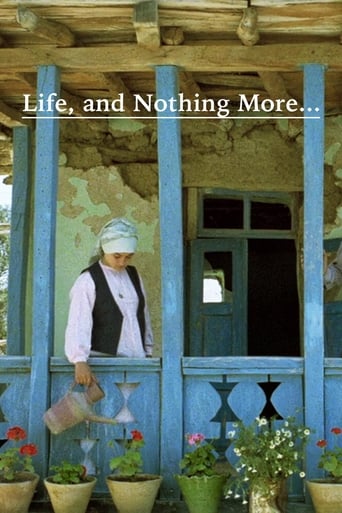
Diary Entry forLife, and Nothing More…

Kiarostami turns disaster into quiet poetry. Through broken roads and soft conversations, we see life go on — not with drama, but with grace. Fiction blurs into reality, and what remains is a calm, deeply human reminder: survival doesn’t have to shout to be heard.
Other Diary Entries forLife, and Nothing More…

Life, and Nothing More…
"God doesn't enjoy killing people." "No one appreciate youth until they grow old or life until they stare death in the face. If the dead could come back and live again they'd surely live better lives." FINALLY I FINISHED THE KOKER TRILOGY!!! The simplicity of Abbas Kiarostami is managed to touch the deepest part of my soul. What a movie! What a trip! P.S. If you wanna watch this movie make sure you've watched Where's the Friend's House and Through the Olive Tree before.

Life, and Nothing More…
عباس عن حواراته التي تدور داخل السيارة : "غالباً ما ألاحظ أننا لا نكون قادرين على النظر إلى ما يوجد أمامنا إلا إذا كان بداخل إطار" " استعمال كاميرا ثابتة في مكان متنقل كالسيارة، هي مكاني المفضل، مقعدان مريحان، وحوار في غاية الحميمة بين شخصين، يجلسان بجوار بعضهما وليس قبالة بعضهما، دون أن يضطر أحدهما إلى النظر في عينيّ الآخر. إنهما في هذه الحالة يتواصلان على نحو أفضل. للصمت في السيارة منطق مختلف. بوسعك أن تنظر إلى الخارج، لكن هذا لا يعني أن الحوار انتهى" جمالية ونقاء سينما عباس شيء ليس له مثيل

Life, and Nothing More…
the follow up to “where is the friend’s house?” that’s linked to that previous film in a more meta sort of way. mixing both fictionalized and real elements, it crafts a similarly human story, this time about moving on in the face of a tragic event. there’s some great little vignettes where we see these brief encounters with various survivors of the earthquake that show how everyone has their own things going on in life, even though people tend to overlook that fact from time to time. it’s a melancholic film, but also hopeful at the same time.

Life, and Nothing More…
Hay algo de lo mundano que a Kiarostami le encanta mostrar y que no siempre entiendo del todo. Esta película es más contemplativa y muestra esperanza en lugares donde uno menos esperaría encontrarla. La gente acaba de perderlo todo en el terremoto y aún así encuentran razones para seguir adelante; religión, amor, fútbol, el simple deseo de vivir. Y una vez más, Kiarostami logra meter momentos de inocencia cuando los niños hacen preguntas que demuestran que no dimensionan la magnitud de las pérdidas que acaban de sufrir. Me llama la atención la idea de que aceptar la muerte como parte de la vida es gran parte de la superación. Además de jugar con elementos de metacine, esta película empezó con las conversaciones fugaces que Kiarostami llegaría a perfeccionar en Taste of Cherry.
Sign in to track, rate and review films
Sign in to track, rate and review films
