Diary

May 2026

The Devil Wears Prada
April 2026
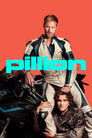
Pillion
They have the gaze of a thousand depressions
Pillion
“Isn’t… love the whole point.” “Of what?” “Everything.” It’s so surreal to have cried during a sex scene, I didn’t know I needed this experience so much until I had it and honestly I could keep crying for hours. It’s nice to be able to say that now Pillon is one of my references when talking about good power dynamics in film. The work that Harry Melling and Alexander Skarsgård do is so emotional that it’s going to be hard for me to stop thinking about both of them for days. There is a certain rejection of these kinds of dynamics, of the ways in which many people choose to connect. This sexual and expressive freedom tends to be demonized and discredited when honestly many of those relationships are completely consensual and are okay. The romance it explores, because yes let me tell you that the love story between Colin and Ray is one of the most beautiful I’ve seen in quite some time, is full of subtleties, of body expressions and of silences that hurt as much as they please. It fills me with so much pain the way Harry Melling makes Colin get under my skin, making me feel everything he doesn’t dare to say, every fear, every pain, every happiness and every damn emotion as if I were living it myself. Finding yourself is born from painful experiences and happy ones, the whole path toward that is full of cracks and that only makes it much more peaceful when we finally realize our own limits and desires.
The Super Mario Galaxy Movie
Fox McCloud, I've got you ;)

The Drama
I had my expectations way too high for this movie, and it didn’t meet even half of them. At least they did a good job with all the marketing around Zendaya and Robert. The Drama starts from a provocative premise, putting an uncomfortable moral issue on the table and pushing it to the limit within a relationship. The problem is that the director tries to land a strong punch… and ends up with nothing. It introduces a “delicate” conflict, but doesn’t manage to go beyond the initial shock. The story revolves around an assumption, an idea that settles in Charlie’s mind and begins to completely destabilize him. This is probably the most interesting axis, how something unconfirmed can corrode perception, the relationship, and emotional stability. However, what could have been a solid psychological study turns into a stagnant narrative that is, at times, absurd. Charlie’s constant ambiguity, far from enriching the premise, becomes irritating and excessively prolonged. One of the most striking elements is the suggestion of shootings as a “performative” act, especially from Emma’s perspective, who seems drawn to their aesthetic, while also seeing them as an immediate solution to the bullying she experiences at school and her own emotional instability. It’s a powerful and uncomfortable idea, with real critical potential… but it is barely sketched out and loses relevance as the story progresses. The dilemma it proposes is so ridiculous that, instead of inviting reflection, it becomes exhausting, almost like arguing with a “Karen” in the United States. And although the film dares to touch on delicate topics, such as the aestheticization of violence or the planning of atrocious acts, it does so in a superficial way. As for the characters, the imbalance is evident. Rachel stands out as the most interesting, she is the one who truly sustains the hypocrisy that runs through the story and the irony that defines it. A white woman who not only planned to do something, but impulsively carried it out, and who ends up judging an Afro-American woman for having contemplated a shooting without going through with it. Her sense of moral superiority is further reinforced by her connection to her cousin, a victim of a similar situation. In contrast, Emma is underdeveloped, and Charlie, probably designed to be pathetic, comes across as excessively absurd, easily manipulated, and lacking any personal judgment, making it hard to connect with his internal conflict. Another aspect that limits it is its strong dependence on the American context. The premise never manages to transcend it, which makes it feel like a closed-off and not very universal work. It may be an intentional choice, but it is still questionable for a foreign filmmaker to adopt this approach without offering a broader or more critical perspective. Additionally, the film feels unnecessarily long. The dilemma doesn’t evolve, it just stretches out, and by the end, the reflection doesn’t lie within the work itself, but in a single question: “what would you have done?” It remains an interesting idea, but poorly executed. That said, I did laugh quite a bit.

Hamilton
You’ll probably call me crazy for marking Hamilton after watching it not as a movie, but as a stage play in Roblox. What can I say? I’ve never seen it on Broadway (I doubt I ever will), but I have seen it in fan animations, in Animal Crossing, the film itself and now in Roblox. I’m happy with very little.

Hoppers
What’s surprising is that it’s a Disney film, it’s gratifying to see how Pixar takes risks with a narrative that escapes the “we’re all good” framework and even presents a darker tone that I never thought they would use nowadays. Broadly speaking, the message is one we all already know. The same morals, similar lessons, and a critique of capitalism, which, in the end, screws all of us over. I had quite a bit of fun during the movie, although there were moments when I just wished the protagonist would relax a bit. Even so, it’s an entertaining experience that’s worth it, especially for the risks it takes within what Disney offers.

Project Hail Mary
Unfortunately, I didn’t finish the book before this day hehe, but I have no complaints,I loved it. Visually, it’s a marvel. The colors, the shots of space and the ships… everything is simply beautiful. The design of the ship, and especially everything surrounding Rocky, completely pulled me in. Speaking of the more intimate and emotional side, the way the relationship between Grace and Rocky develops is truly beautiful. I mean, I think that in most cases we have this idea that if life existed on other planets, there would be conflict involved, when in reality they’re probably just trying to survive, just like us.

Your Name.
🙂🔫
Impossible Things

Dear Evan Hansen
Que mierda de película, me encanta
March 2026

In the Heights

Arrival

Sinners

One Battle After Another
It’s much better the second time you watch it, I honestly had a great time. It’s hilarious, and if DiCaprio has given better performances, forget them, this is where I like him the most. And you know, with all this drama forming around the Academy Awards, I say: why not just give Leonardo another Oscar? He was excellent, And that would be a thousand times better than giving it to a young man who still has a huge career ahead of him.

The Trial of the Chicago 7
“I think the institutions of our democracy are wonderful things, that are right now populated by some terrible people.”

Django Unchained

Bugonia
Definitely much better this second time around. I enjoyed it more and fully immersed myself in this paranoid, conspiratorial vision of Yorgos Lanthimos. The first time, it didn’t completely convince me because my experience of Save the Green Planet! was still too fresh, I found it incredible, and it may have slightly overshadowed my initial perception. Although I still think that one has something very special, Bugonia has countless layers of its own and definitely doesn’t fall behind. The final sequence still strikes me as visually beautiful, and it’s filled with that irony so characteristic of Lanthimos, which he seems to infuse into each of his films. It’s a work that feels more solid when viewed without immediate comparisons, and I’m grateful I was able to give it another perspective.
February 2026

GOAT
Chistosona, vivan los furros

Hamnet
"I’ll tell it to take us both. We’ll go together. Turn away. Turn away. It’ll make a mistake. It can’t tell us apart." I was left blank after watching it. I’ve been on a streak of tragic films that feed into my depressive episode, but it is somehow comforting to accompany sadness with different feelings. Hamnet is an emotional, theatrical film with enormous sentimentality. A work that is felt more than it is seen, one that uses art as a means to cope with grief, the sensory as a way to preserve absence, and vulnerability as its narrative pillar. Each and every performance is magnificent, with the duo of Jessie Buckley and Paul Mescal standing out, of course. Both construct a different yet complementary form of grief: one more explosive and harrowing, the other restrained, intimate, and paralyzed by the impossibility of naming the pain. Which in the end finds itself in art, in the preservation of a memory captured in a written piece that comes to be performed for the world.
