Diary

May 2026
Michael
April 2026

Bugonia
March 2026

Project Hail Mary

Jurassic World Rebirth
Hoppers
February 2026
Hamnet
January 2026
No Other Choice
The Wolf and the Three Houses The Exclusion Method is a rare case where everything feels just right and all you want to do is applaud. From a directing and staging perspective, the film constantly finds smart, inventive solutions, maintaining tension and never letting the story grow stale. What stands out most is its tone. The film carefully balances bleak drama with stylized comedy, allowing both to coexist without undermining each other. The lead actor delivers an incredible performance, confidently carrying the entire film on his shoulders. This is bold, cohesive filmmaking — fully confident in its vision. Highly recommended.

F1
The Long Flight to Victory F1 doesn’t try to be just a sports film — it aims higher and largely succeeds. The direction and cinematography are top-tier: speed feels physical, races are shot with clarity and intensity, and nothing turns into visual chaos. Hans Zimmer’s score fits the film’s rhythm perfectly, adding tension without overwhelming the scenes. The screenplay is a pleasant surprise as well, giving the story more depth than expected and pulling you straight into Sonny Hayes’ journey. There are a few minor flaws. Early on, many characters show unexplained hostility toward Sonny, which feels somewhat forced. The antagonist, especially in the final act, drifts into cartoon-villain territory — a strange choice for such a grounded film. Brad Pitt fits the “outsider” role well but stops short of a truly standout performance. Meanwhile, Javier Bardem and Damson Idris are excellent, often stealing the spotlight. Still, this stands as one of the best racing films in recent years and deserves serious Oscar consideration.
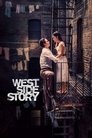
West Side Story
Colorful Fights In 2016, I had the opportunity to attend the musical West Side Story, staged by Iris Limbarth. At the time, I was overwhelmed with emotions and expected a similar experience from the film adaptation. This movie not only met my expectations but truly surprised me with its scale, staging, and choreography. I especially appreciated how Spielberg perfectly balances theatrical elements with cinematic expression. It is undoubtedly one of his finest works.
December 2025
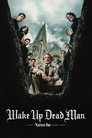
Wake Up Dead Man: A Knives Out Mystery
Righteous Lie The third — and what appears to be the final — chapter in the story of Benoit Blanc has come to an end. Another murder is solved, this time one that borders on the realm of fantasy. But that is exactly where Rian Johnson’s charm lies: making the audience puzzle over the mystery as the story unfolds, while constantly surprising them with new twists along the way. What I especially liked in this installment is the atmosphere and the color palette, as well as the cinematographer’s varied visual choices. The cast, however, was somewhat disappointing — more precisely, the script, which was too stingy in developing chemistry between characters played by Jeremy Renner, Andrew Scott, Cailee Spaeny, and Thomas Haden Church. Unfortunately, these talents were relegated not even to the second, but to the third tier. In any case, I was already certain that nothing would ever top the first film, but this one comes as close to it as possible. In
November 2025
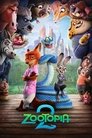
Zootopia 2
The mobsters have gone wild Zootopia 2 transitions so smoothly from the first film that it feels like one continuous story rather than a soulless sequel. The crew did a fantastic job enriching an already vibrant world with even more detail — major kudos for that. And once again, I won’t bother praising Disney’s animation; they’re unmatched, as always. Where the film stumbles is in the originality of the script and a few pretty glaring plot contrivances. Some might say, “Why nitpick the logic of a movie with talking animals?” — and they’d have a point. Still, I think those moments hold it back. And although the film absolutely entertained and delighted me, I can’t justify giving it a very high rating. And yes, the moment every kid (and, fine… even I) was waiting for finally happened: Nick did say those beautiful three words to Judy.
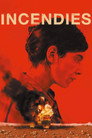
Incendies
The Story of a Lost Mother I finally got around to watching Denis Villeneuve’s early film Incendies. I was initially worried that Villeneuve’s debut in cinema would turn out to be one of those clumsy first attempts, but I was pleasantly surprised to see how masterfully he directed such a complex story back in 2010 — a story that not only needs to be filmed well but also conveyed with great sensitivity. At its core, the film tells the haunting story of a mother torn apart by war and her children’s journey to uncover the painful truth about her past. It turned out to be an intense two-hour experience that I simply couldn’t look away from. At times, a few actors showed a bit of inexperience, making certain scenes feel somewhat theatrical, but the overall atmosphere and the tension in key moments more than made up for it.
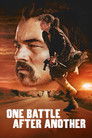
One Battle After Another
Wild hunt I finally watched Paul Thomas Anderson’s new film. Right away — it’s beautifully made. The direction is top-notch, the camera work is precise, and the acting is strong. I especially liked Sean Penn — his performance is easily the best in the film. Everything he does feels real and alive. However, the script and pacing don’t quite hold up. The beginning is dynamic and immediately grabs your attention, but then the film loses momentum for a while before picking up again toward the end. Overall, the story left me with mixed feelings — it feels ambitious but lacks emotional depth. DiCaprio, surprisingly, plays pretty much himself again — nothing new or unexpected. And it’s a shame Benicio Del Toro didn’t get more screen time: his character, a karate master who once trained Chase Infinity’s character, could have added something interesting, but it ends up having no real impact on the story. In the end, it’s a beautifully shot film, but without the depth one usually expects from Anderson.
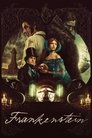
Frankenstein
Creator and Martyr I’ve never had much love for monster movies. Especially in the past decade — I can’t recall a single good film where you could genuinely feel sympathy for the creature. They’ve mostly been cheap horror flicks or clumsy attempts to reinvent the genre. But this character was lucky to fall into the hands of the brilliant Guillermo del Toro, because no one could have made a film like this better — particularly when it comes to the visual side. That’s where the film truly shines: direction, production design, costumes, makeup — all absolutely stunning. The cast is equally impressive; every actor delivers a strong performance. In my opinion, the movie fully deserves Oscars in several of these categories. So why isn’t it a masterpiece for me? There are a few reasons — mostly related to the script, pacing, and casting choices. First, the film felt a little too long; trimming about 10–15 minutes would have helped. Second, there were a few narrative inconsistencies, but what confused me the most was how all three main characters were so deeply in love with such an unremarkable woman. The casting team could have chosen someone more striking — say, Margaret Qualley, for example. Still, overall, I consider this film to be the best adaptation of “Frankenstein”, and one of the strongest modern reimaginings of classic monster cinema.
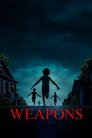
Weapons
Naruto Style It’s fascinating to see how horror is having a major resurgence lately—especially considering that just five years ago, it was one of the most overlooked genres. That said, Weapons doesn’t exactly feel like a horror film to me. I’d rather call it a thriller with horror elements. Still, I genuinely appreciate that Zach Cregger, like many of today’s directors, is moving away from cheap jump scares. He doesn’t try to wreck your nervous system just for the sake of it—instead, he puts real effort into the story. And that alone is worth praising. It’s actually making me fall back in love with the genre. As for the film itself—it’s not a masterpiece, but it’s definitely more watchable than Barbarian, which suffered from jarring editing and a certain sense of cheapness. Here, I liked the characters, I loved the heavy, unsettling atmosphere, and both the direction and cinematography were top-notch. The script, however, left me with a few questions, and the ending… well, it dipped a little too far into unintentional comedy, which undercut some of the tension built earlier.
September 2025
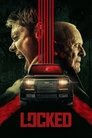
Locked
The Prisoner and the Judge In the era of high-budget blockbusters, films like Locked are often dismissed as “low-budget” and receive undeservedly low ratings. Yet this is precisely where their strength lies. Above all, in the performances: the pairing of Bill Skarsgård and Sir Anthony Hopkins is gripping, charged with tension and emotional depth. Despite its intimate setting, the plot is tightly constructed to hold the audience’s attention from start to finish. Some critics complain that the dialogue feels “unnatural,” but in reality, its precision and restraint create a distinctive atmosphere. If there is one drawback, it would be the overt and overly frequent product placement of a particular car brand, which at times distracts from the story’s intensity. Still, Locked is one of those projects that can easily be overlooked, but it clearly deserves far more recognition than it has received.
August 2025
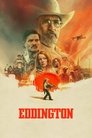
Eddington
The Eddington Bacchanal So sooner or later, someone was bound to make a film about the 2020 pandemic — and it makes sense that it would be Ari Aster. After his previous works, expectations were high that this concept could truly succeed. With such a strong creative team and an impressive cast, it seemed destined to be one of the cinematic highlights of 2025. Unfortunately, the screenplay runs into a dead end, choosing a rather confusing way out. The film begins with a slow build of tension, immersing us not only in the atmosphere of COVID-19 and the BLM movement, but also in the lives of Joaquin and Pedro’s characters. Yet the end of the second act subverts expectations: the central conflict is abruptly dropped, leaving Pedro’s character underdeveloped and unfulfilled. Meanwhile, the additional storyline featuring Emma Stone and Austin Butler feels unnecessary, offering no real resolution and only overloading the narrative. The performances and direction evoke mixed feelings. Joaquin Phoenix — one of the greatest actors of our time, whose work in Joker, The Master, and Gladiator redefined modern acting — plays the town sheriff here, but delivers a surprisingly restrained performance that lacks his usual depth and uniqueness. Pedro Pascal is barely present, as are several other talented actors, leaving the audience wanting more. On the other hand, the directing is remarkably strong. Aster captures the dread and disorientation of 2020 with striking precision. The visual language, atmosphere, and tone all succeed in immersing the viewer in that unsettling time. Sadly, the final twist fails to live up to the film’s potential, leaving behind a sense of incompleteness. In the end, Eddington is a work of outstanding direction undermined by a weak and unfocused script — a film that promises greatness, but never quite delivers.
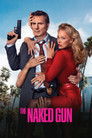
The Naked Gun
A Remake That Misfired Unfortunately, modern screenwriters and directors seem to have lost much of their sense of humor. From the very first minutes, you can’t help but imagine how many genuinely funny moments David and Jerry Zucker could have brought to this film. Nowadays, audiences often laugh at the most lowbrow jokes, and it’s especially noticeable when gags are delivered straight to your face without a hint of subtlety. What I love about the original trilogy is that the humor flowed through every frame, hitting you nonstop so you barely had time to recover from the last gag. This remake, while not entirely devoid of laughs (there were a few moments that genuinely made me laugh out loud), relies about 80% on humor that either repeats itself several times (the coffee joke), drags on for far too long (the dashcam video), or crosses the line from absurd comedy into pure overkill (the snowman). On top of that, the film is cluttered with unnecessary fight scenes and completely unfunny bits involving the removal of body parts. That said, it’s clear the production team made an effort to pay homage to the originals, and the main character even openly states in the dialogue that “things were better back then.” My conclusion is simple: stop reviving old franchises in the hope of making a quick buck — create something new instead.
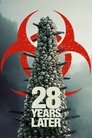
28 Years Later
Zombie Evolution, Human Involution Back in 2002, Danny Boyle delighted horror fans with a film that felt unconventional for its time — one that remained in the memory of many for years, even if it has aged noticeably. I won’t comment on the sequel “28 weeks later’, as I haven’t seen it. Who could have guessed that this franchise would return with such an unusual third installment, set 28 years later? This time, the audience is treated to a fresh experience thanks to distinctive cinematography. The direction, camerawork, sound design, and editing all deserve applause. The plot, much like in the first film, is fairly straightforward, which makes the story falter a little. Still, it’s a solid action-horror that can be enjoyed without having seen the previous entries.

Happy Gilmore 2
Kind of yes, but actually no I’m still baffled by how studio executives are willing to pour money into completely unnecessary sequels to long-forgotten films from decades past. I appreciate their enthusiasm, and maybe the idea looked ambitious on paper, but what we end up with is a drawn-out plot, humorless gags, and a slew of pointless characters. The only thing that truly impressed me was the scale of the production — for a comedy of this sort, that’s remarkable. Everything else is so unremarkable that it’s neither worth praising nor even criticizing.
